Team Germany at the 2026 Flag Football World Championship: Quarterfinals, High Emotions, and the Dream of the Olympics
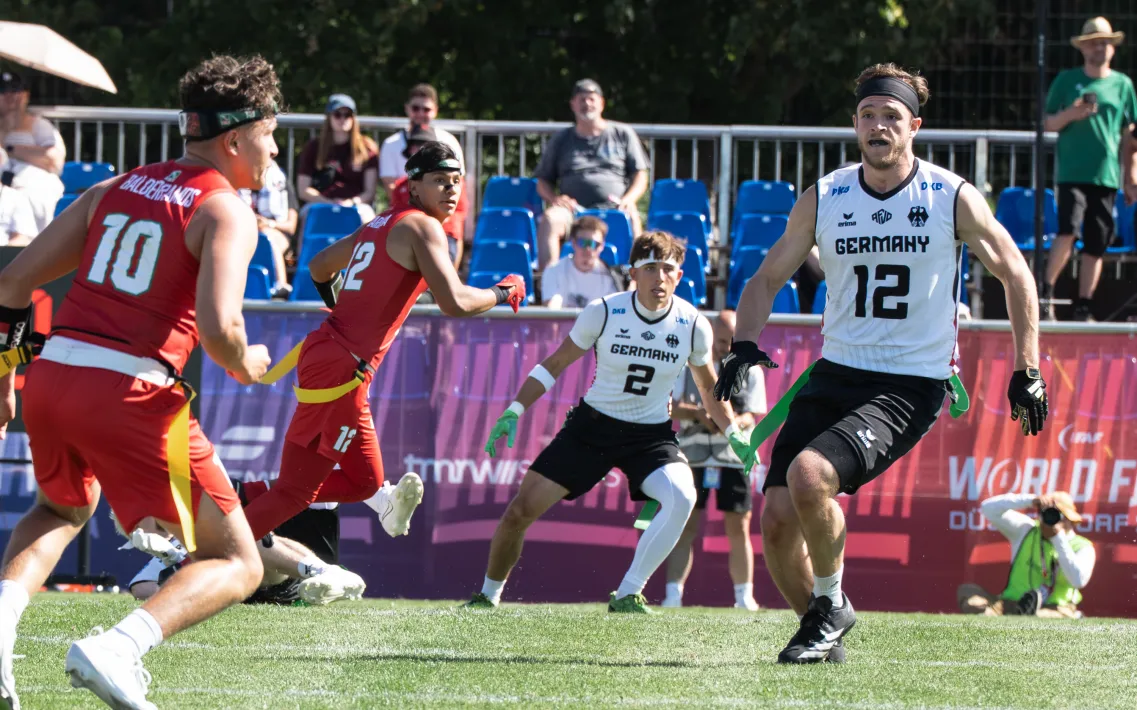
German Teams Reach the Quarterfinals at Home World Championship
The situation heading into the 2026 IFAF Flag Football World Championship was clear: In front of a home crowd, the German national teams wanted to show that they belong among the world’s elite. Both the women’s and men’s teams achieved this goal.
Both teams advanced past the group stage and made it into the top eight nations in the world. For the German men’s national team, led by captain Moritz Apfel of the Munich Spatzen, reaching the quarterfinals was also the minimum goal they had set for themselves.
With some hindsight, however, Apfel’s assessment of their performance is more nuanced.
“On the one hand, we achieved our minimum athletic goal and showed a clear improvement in performance; on the other hand, we lost three games that we could have—or should have—won with a more mature performance.”
His conclusion reflects this: “Overall, I’d say: I’m satisfied, but not happy with our
German Women Fall Just One Point Short Against World Champions USA
The German women’s national team, in particular, demonstrated just how close Team Germany has already come to the very top of the world.
In the quarterfinals, Head Coach Jona Winkel’s team faced the reigning world champions, the U.S. Germany kept pace throughout the entire game and had a chance to advance to the semifinals right up until the end. With a final score of 34–35, they ultimately fell just one point short of pulling off a major upset.
In the subsequent fifth-place game, the German team once again demonstrated its quality, defeating Austria decisively 34–6. The German women thus finished the home World Cup as the fifth-best flag football team in the world.
This result offers hope for the future development of the sport in Germany and the 2028 Olympic Games.

Italy Stops Germany’s Men in the Quarterfinals
In the quarterfinals, the German men’s national team faced another top-tier international opponent in European champion Italy.
The game was close and tactical for a long time. In the end, Italy prevailed 38–22. From Moritz Apfel’s perspective, it was primarily the little things that made the difference at this level.
“The game against Italy was very close and played tactically, and in our sport, the first mistake is unfortunately often decisive. Unfortunately, we made that mistake after missing one or two chances on our end.”
For the German captain, it was precisely these moments that highlighted just how narrow the gap to the best teams has become—and at the same time, what Team Germany still needs to work on on its path to the Olympics.
Two Narrow Losses to Close Out the Tournament
Even after being eliminated in the quarterfinals, things remained dramatic for the German men’s team.
Against American Samoa, Germany suffered a 31–34 defeat in a close placement match. In their final match against Panama, they once again fell short by just a single point: Team Germany lost 32–33, finishing the World Championship in eighth place.
Three losses in the decisive phase of the tournament—in some of which Germany was just a few plays away from a different outcome—therefore shape Apfel’s assessment.
At the same time, the national team player takes away a key insight from Düsseldorf:
“We’re back among the world’s best, but there’s still a small gap to the very top. Closing that gap will be the task for the next cycle.”
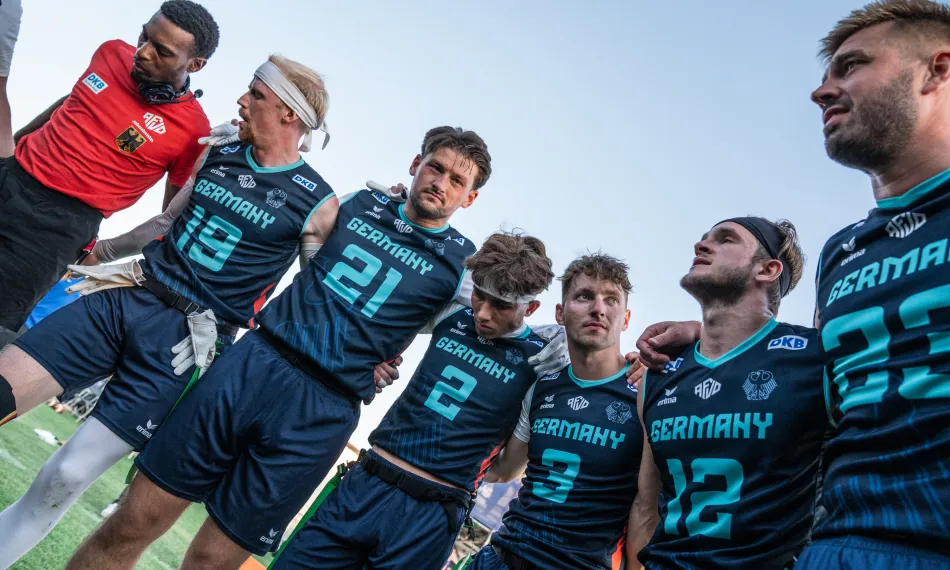
Home World Championship Becomes a Special Career Moment for Moritz Apfel
Beyond the on-field results, what Moritz Apfel will remember most is the atmosphere of the home World Championship.
The Munich Spatzen player led the German national team onto the field as captain. In front of home fans and his own family, the tournament thus became one of the greatest moments of his football career so far on a personal level.
“It was incredible and truly very special. The noise from our fantastic fans, standing there during the national anthem, our team chemistry—it’s all still so vivid.”
Apfel even describes leading Germany as captain at a World Cup as “the honor of my life.”
He doesn’t view the role merely as an honor during a tournament. The captaincy also comes with responsibility and the trust of coaches and teammates—trust that must be earned throughout the entire preparation period.
From the German Champions in Munich to the National Team
For Apfel, two sporting highlights this summer came in quick succession. Just about two weeks before the World Championship, he had won the German Flag Football Championship with the Munich Spatzen.
However, he had to quickly put that club success aside before the World Championship. After all, many German national team players had faced each other as opponents at the club level just a few weeks earlier.
“We had to switch immediately from opponents to teammates, since the majority of our national team players also play at the highest level for their clubs. But that wasn’t a problem at all—we have a group of players who get along far too well on a personal level for that.”
The level of play rises significantly, especially on the national team. For Apfel, the biggest difference—aside from the limited time for joint training—lies primarily in athleticism.
“Especially on defense, you have to instinctively know what the player next to you is doing—you have to develop that in no time at all. The difference in level is mainly due to athleticism; speed is highly valued at the international level.”
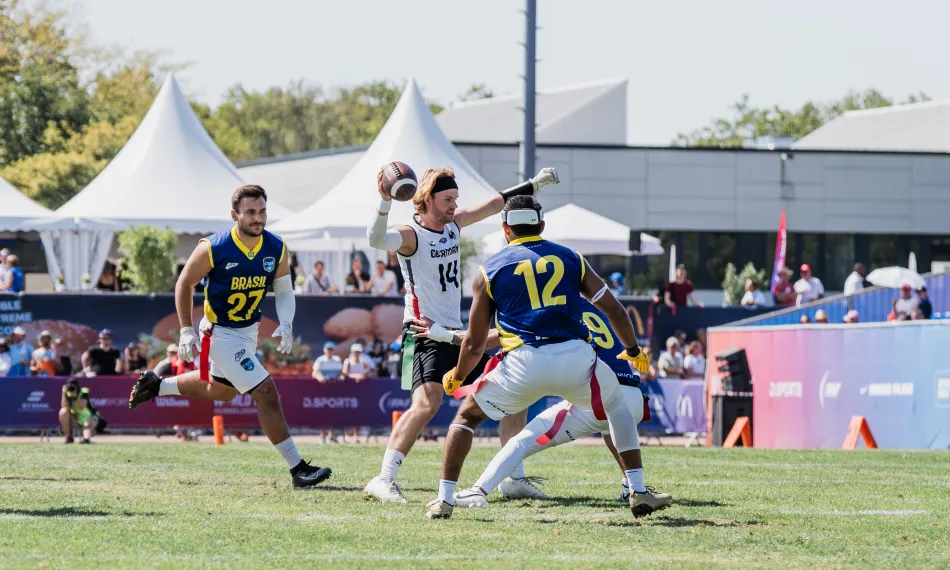
The 2028 Olympics Remain the Big Goal
Neither the German women’s nor the men’s teams in Düsseldorf managed to qualify directly for the 2028 Olympic Games in Los Angeles. However, that by no means means the Olympic goal is out of reach.
Both German teams can qualify for the 2028 Olympic Qualifying Series through the 2027 IFAF European Championship. Additional spots for Los Angeles will be awarded there.
For Moritz Apfel, the prospect of the Olympics is an extra source of motivation after many years in competitive sports.
“Just being able to play for Germany is an incredible privilege. And then, after many years of competitive sports, to unexpectedly get another chance to compete on the biggest stage in world sports—that’s a dream.”
The focus is therefore already on the next cycle and the task of further closing the gap that still exists between Germany and the world’s elite.
Flag football continues to grow in Munich as well
These developments on the international stage are coinciding with a sport that is becoming increasingly visible in Germany as well. NFL programs, new flag football opportunities, and the Olympic debut in 2028 are ensuring that more and more people are being introduced to the non-contact version of American football.
Apfel is also clearly noticing this change.
“These days, you meet a lot of people who are familiar with the sport. But even within the football bubble, more and more players from tackle football are trying it out and realizing that it’s just a ton of fun.”
This growth is particularly evident in Munich. For the Munich Spatzen, the rising demand even led to space constraints during training at times. For the coming years, Apfel therefore sees building a sustainable youth program as a central priority.
This requires not only dedicated coaches but also sufficient training space.
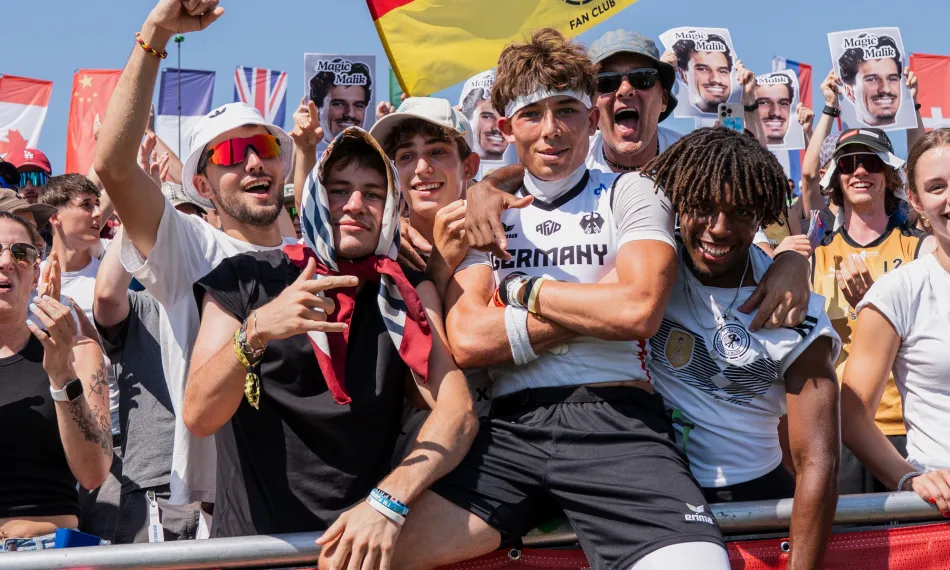
Munich Between the NFL Munich Game 2026 and the Flag Football Boom
The Munich Spatzen’s strong year and the performances of their national team players at the home World Cup fit into a phase in which American football and flag football are becoming increasingly prominent in Munich.
With new flag football opportunities in public spaces, a growing community, and the 2026 NFL Munich Game, football is gaining even more attention in the Bavarian capital.
For Moritz Apfel, despite all its tactical depth and international ambitions, the appeal of flag football ultimately lies in something very simple.
“It’s fast, challenging, easy to learn but hard to master—and above all else, it’s just incredibly fun.”
The World Championship in Düsseldorf showed just how far German flag football has already come. Fifth place for the women and eighth place for the men are strong international results—but at the same time, they serve as a starting point for the next big goal: Los Angeles 2028.