Four Teams, Four Leagues: How Munich’s Football Season Kicks Off in 2026
Munich Ravens: A New Chapter in the EFA
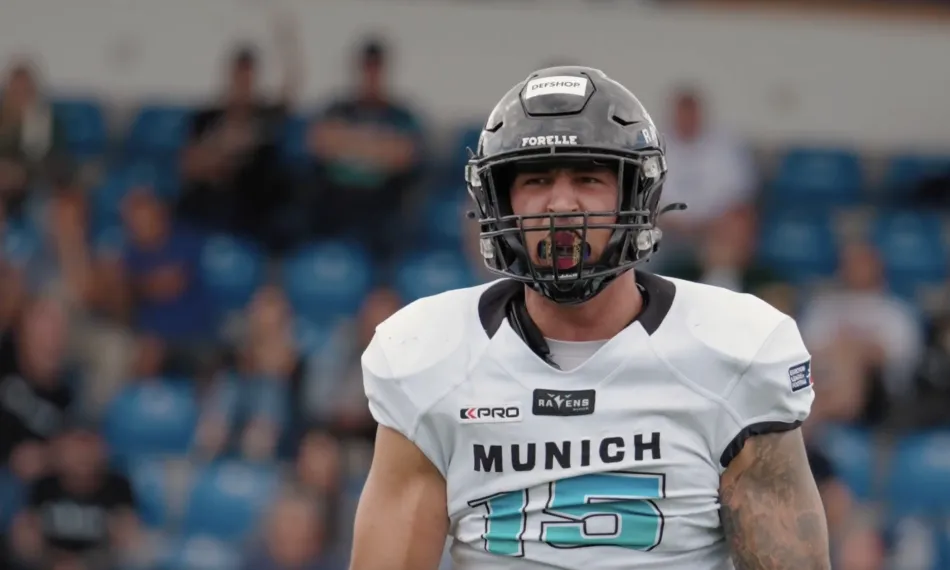
The Munich Ravens are among the most exciting developments in European American football. Founded as recently as 2022, the franchise made a remarkable entry into professional football in 2023. Seven wins in their debut season, their first playoffs in 2024, and in 2025 even the division title and a direct berth in the semifinals—their athletic development has been rapid.
A new chapter is now on the horizon ahead of the 2026 season. Following the upheavals in European football, several franchises have reorganized. With the European Football Alliance (EFA) and the AFLE, new competitions have emerged to replace the previous structure. The Ravens will compete in the EFA in 2026, facing international opponents such as the Raiders Tirol, Frankfurt Galaxy, and the Paris Musketeers.
The season kicks off on May 17, 2026, at Grünwalder Stadium—against the Raiders Tirol, of all teams. This will be followed by games in Frankfurt (May 30) and Paris in early June, before additional international opponents—the Prague Lions and Nordic Storm—come to Munich. By the home game against the Frankfurt Galaxy on July 12 at the latest, it should become clear where the Ravens stand in the new league.
The focus remains on quarterback Russell Tabor, who has already taken on a central role in 2025 despite his young age. The offense is set to become even more versatile around him. He is supported by U.S. wide receiver Malik Stanley and the talented German receiver Louis Geyer. The Ravens also boast a lot of quality on defense.
Defensive tackle Joseph Darkwa brings experience from Temple University (D1) and is expected to put pressure on opposing playmakers. Cornerback Divine Buckram has already played for the San Antonio Bramas in the UFL, the Potsdam Royals in the GFL, and the Raiders Tirol in the ELF. The goal is clear: after two years of development, it’s now time for the next step—becoming a title contender on the European stage.
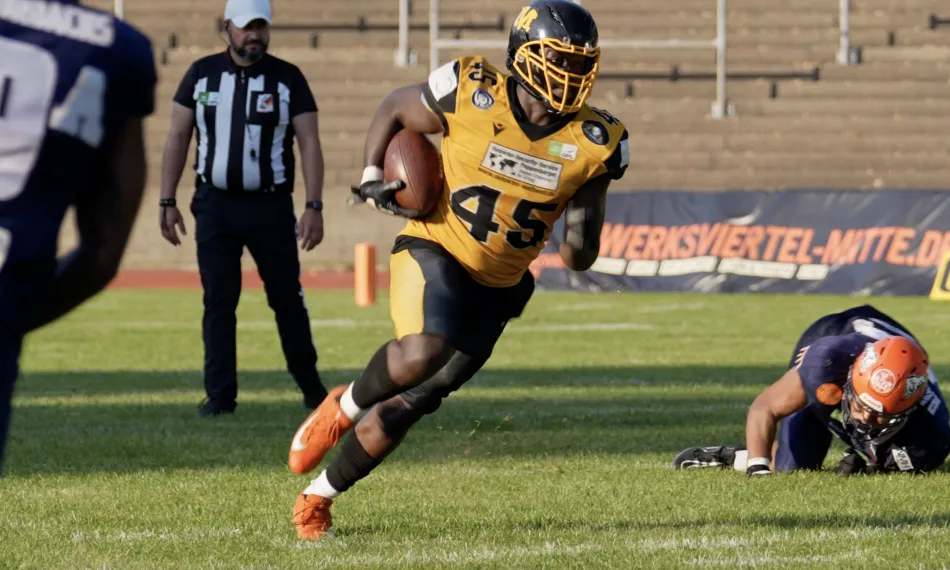
Munich Cowboys: Tradition, Substance, and Looking Ahead
The Munich Cowboys are an institution in German football. Since their founding in 1979, they have shaped the development of the sport in Germany like no other team. As a founding member of the Bundesliga and with their 1993 championship title, they embody tradition, continuity, and football culture in Munich.
The Cowboys will be back in the German Football League in 2026—marking their 43rd season in the top flight. The season opener is sure to be a thriller: On May 9, the Munich team will host the Schwäbisch Hall Unicorns, one of the league’s top teams, at Dantestadion. This will be followed by home games against the Regensburg Phoenix (May 23) and the Allgäu Comets (June 6), before the first major road test awaits in mid-June with the return match in Schwäbisch Hall.
The spotlight this season is on a new playmaker. Quarterback Nicholas “Nick” Semptimphelter brings not only impressive college stats to Munich but also the expectation to lead the offense. His precision in the passing game could be a decisive factor.
Wide receiver Gabe Boccella will continue to play an important role. The receiver was already one of the Cowboys’ most dangerous weapons on offense in 2025 and remains a central part of the offensive game. Boccella scored 9 of the Cowboys’ 23 touchdowns last season.
The season will show how quickly the team chemistry develops. If the Cowboys manage to find stability early on, they will be in a position to play a much bigger role in the GFL than they have in recent years.

Munich Rangers: A Traditional Club Facing an Early Test
The Munich Rangers are deeply rooted in the city’s American football history. Founded in 1981, they celebrated major successes just a few years later, including winning the Silver Bowl in 1986 and promotion to the 1st Bundesliga.
After turbulent years, relegations, and a temporary suspension of operations in 1997, the club managed a fresh start in the early 2000s. Since then, the Rangers have worked their way back into league competition step by step and are once again an integral part of the football landscape in Munich.
The Rangers have already made their mark in the 2026 season. Following their relegation from the Regionalliga in 2025, the historic Munich team is competing this season in the Bayernliga, which is the fourth-highest division. On April 19, the team kicked off the new season at home against the Starnberg Argonauts. Even though they lost the opener, the early start to the season offers a chance to quickly find their rhythm.
The coming weeks will show where the team is headed. Important games are on the horizon, including home matches against the Feldkirchen Lions in early May and the Passau Pirates in late May, before the team heads out on the road in June to face the Bad Tölz Capricorns, among others. By the time the rematch against Starnberg rolls around in early July, it will become clear just how competitive the Rangers are this season.
The key lies in consistency. If the team can maintain a stable level of performance over several weeks, the Rangers can play a solid role in the Bayernliga and establish themselves in the middle of the standings or higher.
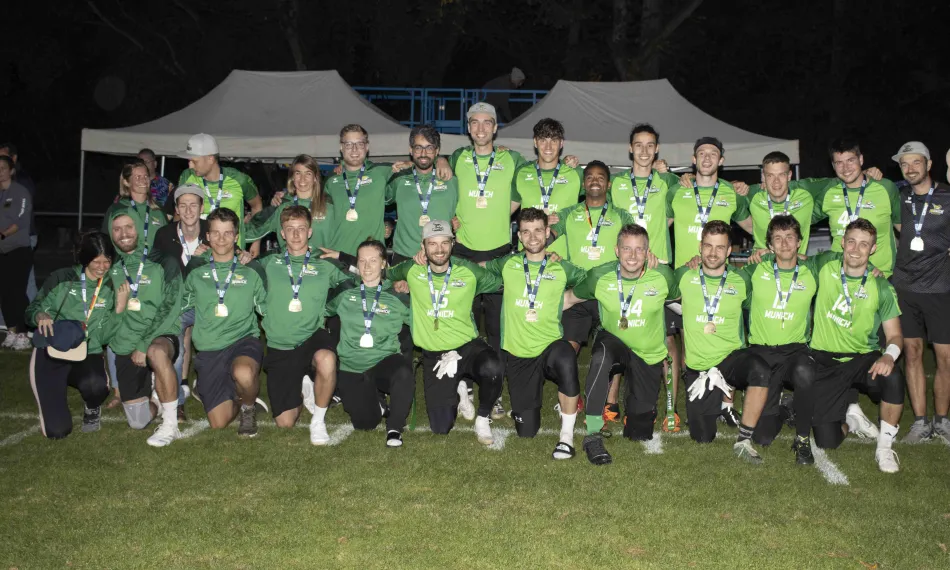
Munich Spatzen: Flag Football with a History of Titles and a Bright Future
The Munich Spatzen embody the development of flag football in Munich like almost no other team. Founded in 2010 out of a student community, they have developed over the years into one of the most successful teams in German flag football.
Multiple college championships and international experience laid the foundation for the next step: joining the German Flag Football League (DFFL). There, the Spatzen quickly established themselves at the top—crowned by winning the German championship in 2024.
The 2026 season is already underway on several fronts. The Spatzen teams are competing in various tournaments and have been gaining match experience since March. A special focus is on the home game day on May 30 at Sportpark Messestadt Riem, where the team will have the opportunity to showcase its skills in front of a home crowd.
Later in the season, match days are scheduled in Lübeck, Cologne, and other cities, before the finals take place in Hanover in July—provided the team qualifies.
After winning the title two years ago, the Spatzen are entering the season with new expectations. The question is no longer whether they can keep up, but whether they can establish themselves permanently at the top of German flag football. One thing is clear: the role of flag football in Munich is growing—and the Spatzen are right in the thick of it.
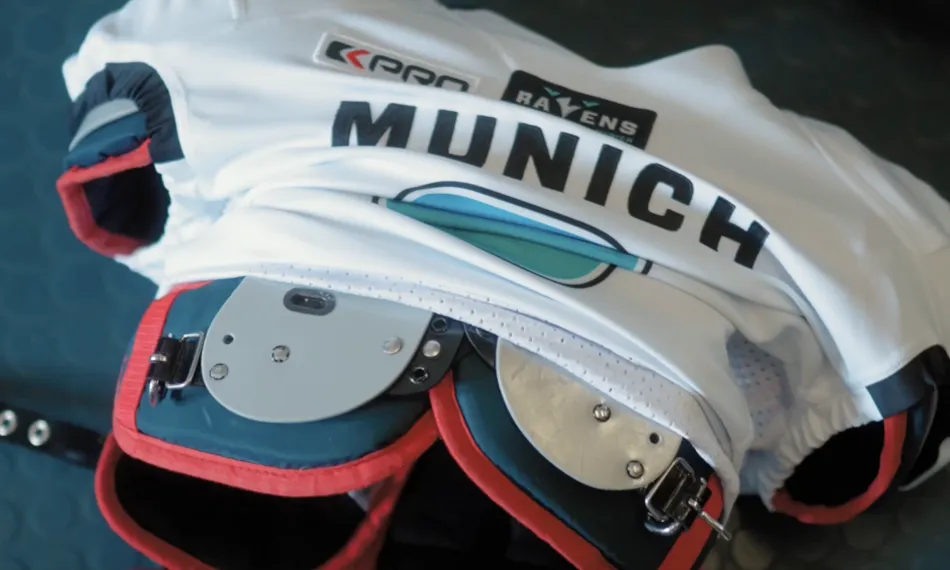
New leagues, new structures: European football in transition
Just a few weeks ago, the future of European American football seemed clearly defined. The European League of Football (ELF) and the newly founded European Football Alliance (EFA) had agreed on a shared vision. But those plans are now obsolete. At the end of March, it was announced that the ELF is in bankruptcy proceedings—a turning point that will permanently alter the football landscape in Europe.
The ELF launched in 2021 with the goal of establishing a top-tier professional league in Europe. However, following strong growth and rapid expansion, structural and financial problems increasingly came to light. A restructuring took place following the resignation of Commissioner Patrick Esume in the summer of 2025 and internal conflicts. Several franchises left the league and joined new projects—marking the beginning of a new European football landscape.
With the European Football Alliance (EFA), a new competition is now emerging that is based on a team-led model. The franchises make key decisions together and aim to develop the sport in a sustainable and controlled manner. Six teams—the Munich Ravens, Frankfurt Galaxy, Paris Musketeers, Prague Lions, Raiders Tirol, and Nordic Storm—will kick off the 2026 season. An expansion is already planned for 2027, including new franchises in London and Milan. Games will be played according to international standards with a salary cap—with the goal of combining competitive balance and economic stability.
At the same time, another project in European football is taking shape: the American Football League Europe (AFLE). The league brings together teams such as the Rhein Fire, Vienna Vikings, Berlin Thunder, Panthers Wroclaw, Alpine Rams, Firenze Red Lions, Paris Lights, and a London team. Unlike the EFA, the AFLE also relies on clear financial backing from a U.S. investor who bears the financial risk during the initial phase. The teams receive guaranteed payments, while sporting decisions are organized collectively.
Both leagues represent different approaches but pursue a similar goal: to give American football in Europe a stable, professional future. For teams, players, and fans, this marks the beginning of a new phase—with new competitions, new structures, and an open question as to which league will prevail in the long term.